Denim and Stars Forever
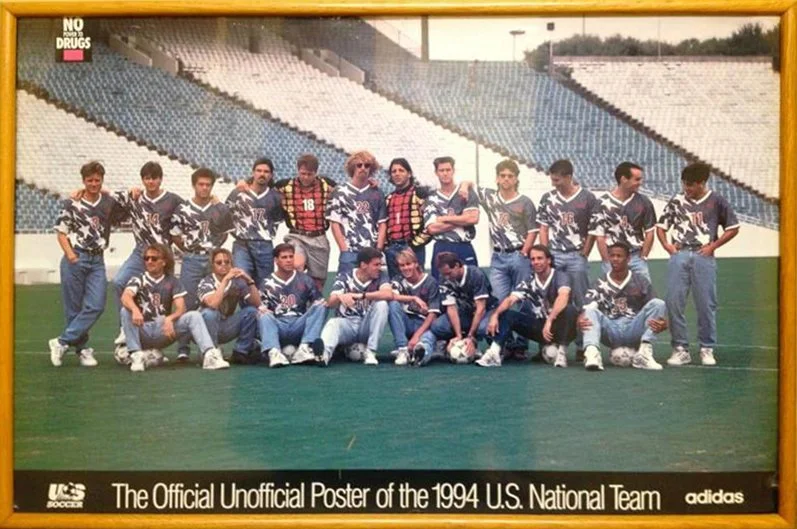
The current World Cup hysteria and excitement around the US National team has us thinking about the last time the US hosted the world's largest sporting event. In 1994, the world was a very different place, and US Soccer was in a very different place. Hosting the World Cup in the United States was a huge opportunity, and there was a lot riding on its success. At the time, soccer was a fledgling sport in America. This tournament was a chance to put US Soccer on the map, to spark soccer’s popularity here at home, and to launch a new professional league (MLS). The stakes were high and adidas, specifically Peter Moore, were charged with designing the US National Team uniforms for this landmark event. It was a chance to make a statement, about US Soccer and about what it means to be an American.
At the time, almost every soccer uniform looked the same, with only slight differences in color blocking to tell which nation was which. Soccer was a very traditional sport, and the uniforms reflected that. adidas had been designing a majority of the national team uniforms for decades of the World Cup games, but this time would be different. Peter set out to create something uniquely American, that stood out and set the team apart from the rest of the world. And what is more American than denim, stars, and stripes? Thus the “Denim and Stars” uniforms were born.
“I remember exactly when I first saw it — I thought “holy shit, what is he doing now?” Bernd Wahler former Marketing Director at adidas as quoted in Pablo Maurer’s excellent 2022 article “The denim kit: U.S. Soccer’s beloved abomination that defined the 1994 World Cup” in The Athletic.
These unique kits were highly controversial, creating a wide range of reactions from love to disgust. The reaction from soccer insiders, like retailers, players, and governing bodies was almost universally bad. They hated the kit, saying it would make the players look like clowns, unserious, and ridiculous. As Pablo Maurer said in his The Athletic article, “It is loud, brash and a little ridiculous — just like the country it represented.”
“For Peter it was just a unique vision that no one else had. At the very beginning, to tell you the truth, we were worried. We have to sell these things at the end of the day…The feedback, unfortunately, when you’re presenting it to a bunch of Europeans, they hated it. They thought we were nuts and they thought Peter was nuts.” Shelly Franks former Soccer Product Manager at adidas (The Athletic).
However, the fans seemed to love them and adidas sold out of the jerseys quickly. These denim jerseys have gone on to become the most iconic uniforms in US Soccer history, and generally beloved around the globe.
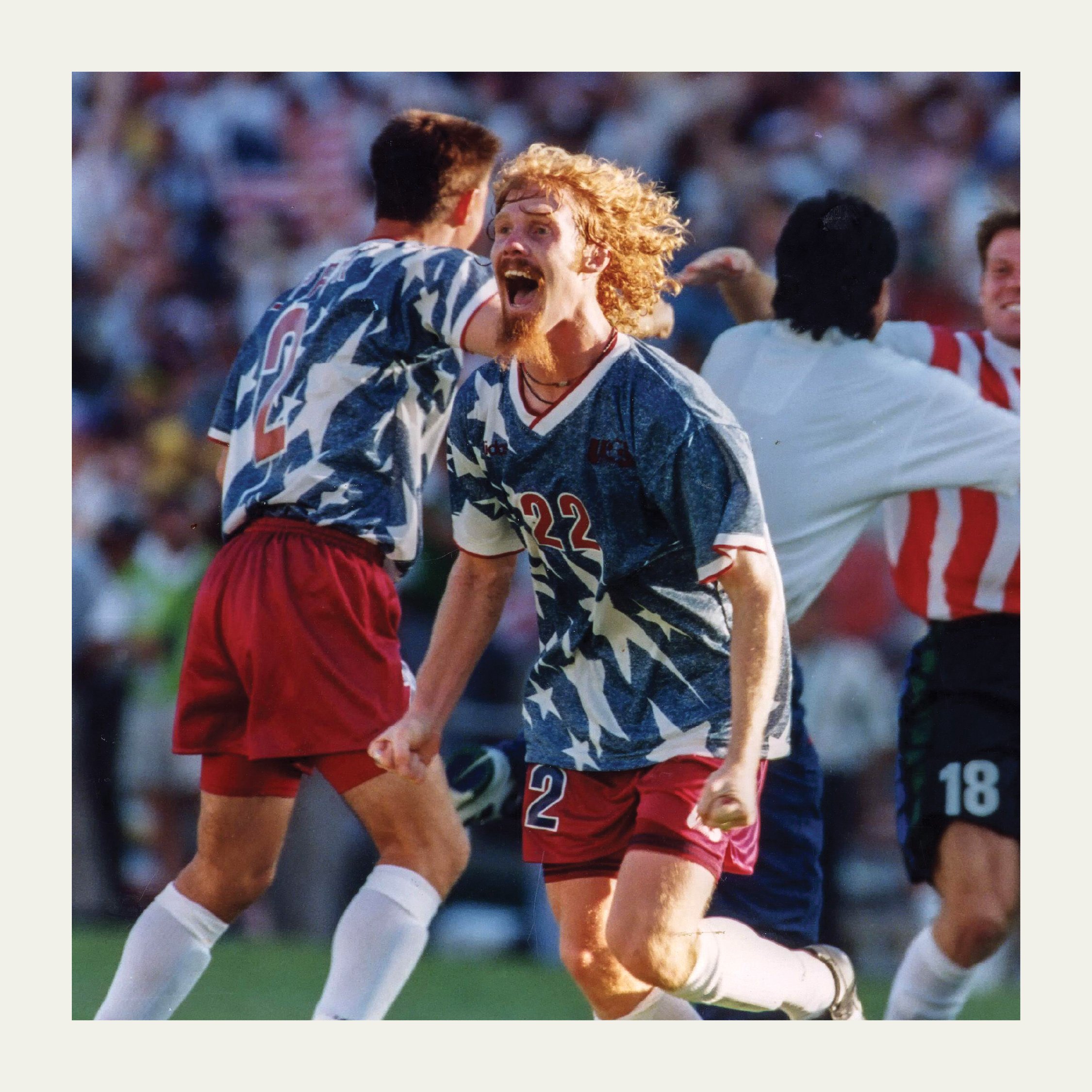
“For a lot of people, and even for a generation, (the denim kit) has grown and matured,” says Alexi Lalas in Pablo’s The Athletic story, “With time, a lot of people have come to appreciate what the designer of that thing was going for. It makes me incredibly proud to see it now. I am always linked to that jersey, and I love that they had the incredible foresight and the confidence to lean into what it was that they were going for.”
The story of the “Denim and Stars” uniforms from the man who designed them was featured in the book Peter Moore Sneaker Legend by Jason Coles:
DENIM AND HOT DOGS
TEAM USA FIFA WORLD CUP 1994
“AS A CREATIVE PERSON, what gets you up in the morning is reaction. In my world, if you have a strong reaction, that’s a positive. They’re awake and paying attention. There was and is so much bland, price point product in the market that I think people are numb from it all, and so it’s hard to get their attention. With the shirt we did for the US soccer team in ‘94, people had a strong reaction.
The design process was not as you might imagine. What went on in those days was almost senseless. We shot from the hip very often, but so did the industry.
It was much more like, ‘Hey I have an idea, let’s be American, let’s not try to be European, or whatever we think real football (soccer) looks like, let’s just be American.’ That became the direction. Then what does that mean? What’s an American fabric? Denim. Great, let’s do denim—but really you can’t do real cotton denim, it will be too heavy and not very functional which would be against the adidas brand. Therefore, let’s make a shirt and shorts that look like denim. American kids running around in denim, what could be more American—you could even have them eat hot dogs.
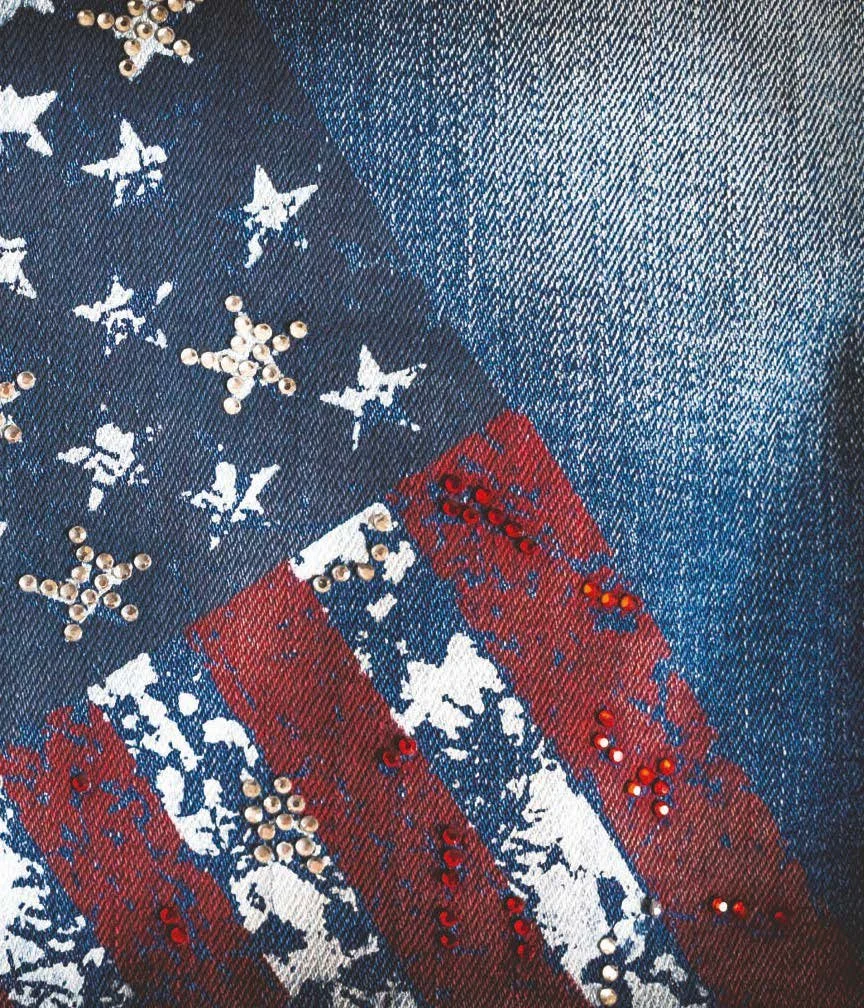
That covered one shirt, but that wasn’t enough so we had other shirts, at least one with wavy red stripes. It was like ‘dress them in the flag.’ Once we had the safe option, we did some drawings and laid stars on shirts and distorted them on the Xerox machines by dragging them across the glass as it was scanning. Remember, in ‘93 computer graphics were not really in existence, at least not in Portland, Oregon. In other words we had to get our hands dirty.
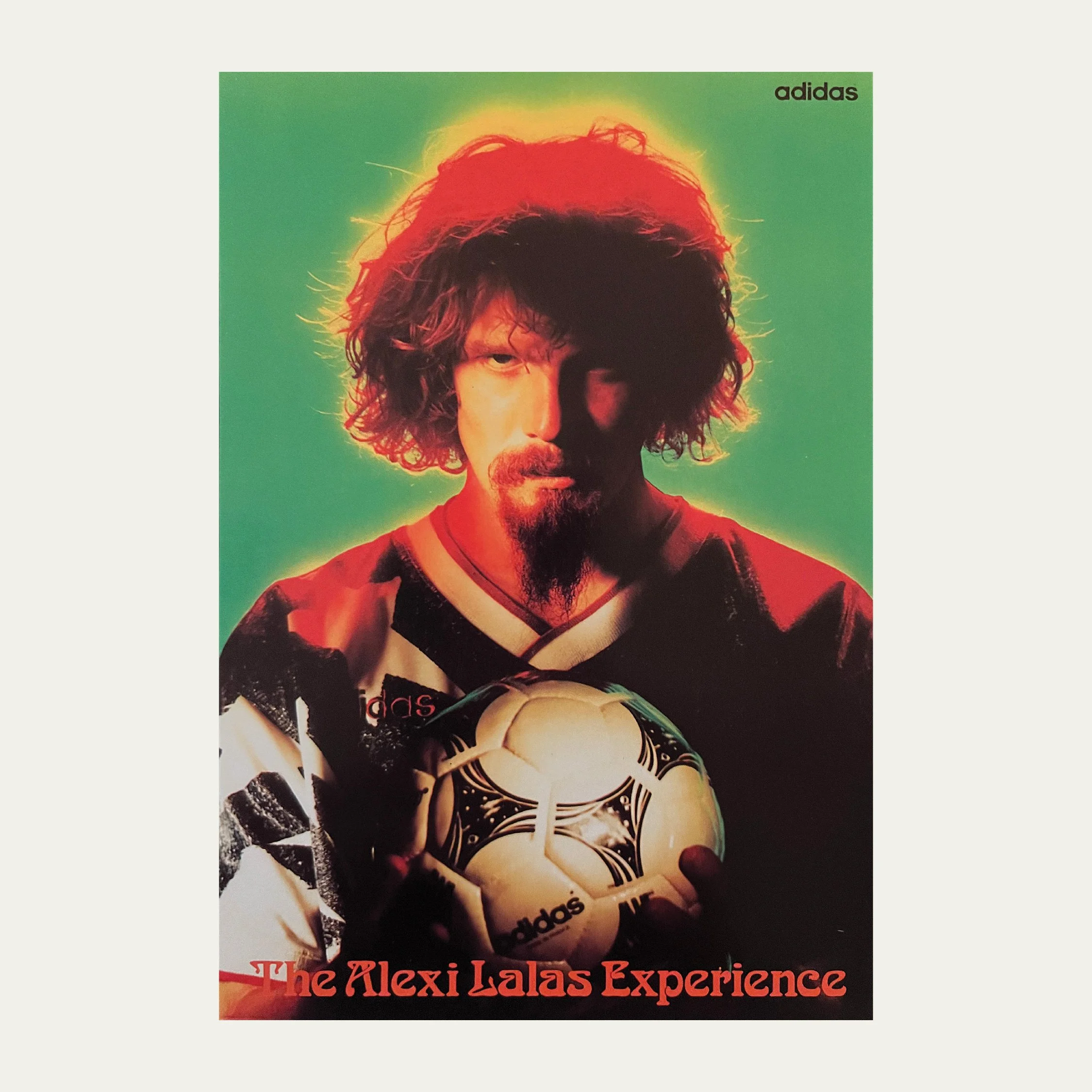
I think the team was pretty much split on the shirts. I believe Alexi (Lalas) liked the denim, but he was kind of a denim guy as I recall. We did a poster of him that was kind of a Grateful Dead look, he was perfect for it. I think the organization was okay with it, but they also knew that they were going to jump from adidas to Nike right after the Cup, so they really were not looking to give us any issues.
I have a feeling that many inside the organization didn’t like the shirt because it was not European, and they had a bad case of ‘European wannabe’ in those days. Today, everybody looks the same and you can hardly tell which country is which country.
The main thing about the uniforms were they worked, they were a bit ahead of their time, which might have caused some issues, but not many. As for me, I couldn’t care less what the organization thought, I cared a lot more about what the players thought, what they really liked and didn’t like, but they were not easy to get to. American bureaucracy even in football (soccer), even in 1994. I am sure it hasn’t gotten better.
My opinion about the shirt today is even more positive than it was then. My reasons are simple, and they are the same reasons why we did it in the first place: it’s American. Who else could, or would do a shirt that looked like it was a pair of 501 jeans? Who else would put distorted stars, caused by the speed of the guy wearing the shirt, on a distorted blue field? Or was that a play on the American Flag? That’s up to the viewer, I merely designed the thing.” - Peter Moore in Peter Moore Sneaker Legend.
Looking back on the 1994 US National Team jersey story shows us once again how ahead of his time Peter could be. Maybe it was his genius, his ability to get at the core of any design problem and produce a solution so perfectly fitting that it doesn’t immediately strike you as right, but over time you come to realize just how perfect it really was. The iconic “Denim and Stars” jerseys live on today and are as unapologetically American as they were intended to be back in 1994.
“Peter is, for me, the biggest genius I’ve ever met when it comes to creativity, to understanding a brand and what needs to be done. I think the denim away shirt from the US national team, that’s just one great example.” Bernd Wahler from The Athletic. article.
“It was weird how fast those jerseys grew on us. At first we were like, ‘Holy s***, we have to wear this thing?’. And then we got to the biggest game of our lives and we were like, ‘Hey, can we wear the blue uniforms please?’” Eric Wynalda (The Athletic).
“The players weren’t the only people who came around to the jerseys. The crowd that day at the Rose Bowl was awash in denim. Denim jerseys, denim T-shirts. adidas’ gear was everywhere.” Franks, who remembers getting laughed at by retailers as she pitched the gear ahead of the tournament, was shocked. “We sold every single replica jersey that we made,” she says. “It was crazy. We sold 60,000 and we could’ve sold 100,000 or a million. We could’ve. Even after the event, they were in high demand. I did not see that coming. I don’t feel like we bought enough. I thought the design might be a little too polarizing, and just the feedback we received going into the Cup, it wasn’t nice.” Shelly Franks from The Athletic.
“It took some time, but Peter Moore’s vision for the denim kit eventually bore fruit amongst modern fans, as well. Decades after its debut, it is now beloved. It pops up every World Cup cycle on a few ‘worst World Cup kits of all time’ lists, but it also appears on just as many ‘best ever’ lists.” author of the article “The denim kit: U.S. Soccer’s beloved abomination that defined the 1994 World Cup”.
Once again, well done Peter, and thank you for yet another gift of your creative genius.